The Most Expensive Design Mistakes I See—and How to Avoid Them
The expensive mistakes happen when money is spent too early, in the wrong place, or without a plan. Here is what I see most often—and what I would do instead.
One of the biggest misconceptions about interior design is that mistakes happen because someone didn't spend enough money. In my experience, it's usually the opposite. The expensive mistakes happen when money is spent too early, in the wrong place, or without a plan.
I see it all the time. A client buys a sofa before we have worked out the floor plan. Construction starts while major design decisions are still unresolved. Someone falls in love with a beautiful tile without considering the countertop sitting next to it. Or a renovation budget covers the construction beautifully—but no one accounted for the furniture, lighting, window treatments, art, or installation needed to actually finish the home.
None of these are terrible decisions on their own, but they can become very expensive ones. Here are the mistakes I see most often—and what I would do instead.
Please Don't Buy the Sofa Yet
I know. You found the perfect one. But before we order it, I want to know exactly how that room works. How much space do we have around it? Where are people walking? What happens when we add two chairs? Where does the coffee table go? Is there enough room to pull out the dining chairs behind it? Where are the windows, doors, fireplace, and television?
A sofa can look perfectly proportioned online or in a giant showroom and feel enormous once it arrives in your living room. This is why I start with the floor plan. I would much rather discover that a sofa is six inches too long on paper than after a delivery truck pulls away.
Plan first. Shop second.
Stop Designing the Room One Purchase at a Time
This usually starts innocently. You buy a sofa you love. Now you need a rug that works with the sofa, a coffee table that works with the rug, and chairs that work with all three. Six months later, you've spent a considerable amount of money and somehow the room still doesn't feel finished.
That's because you've been solving one problem at a time instead of designing the room as a whole. Before I start sourcing, I want to know where we're going. What's the palette? What woods are we using? Where do we want contrast? What should feel quiet? Where do we want color? What's the visual weight of the furniture? What is the focal point?
Once we know that, shopping becomes much easier. And no, everything does not need to match. Actually, I don't want it to. I just want everything to look like it was invited to the same party.
Don't Start Construction and Figure Out the Design Along the Way
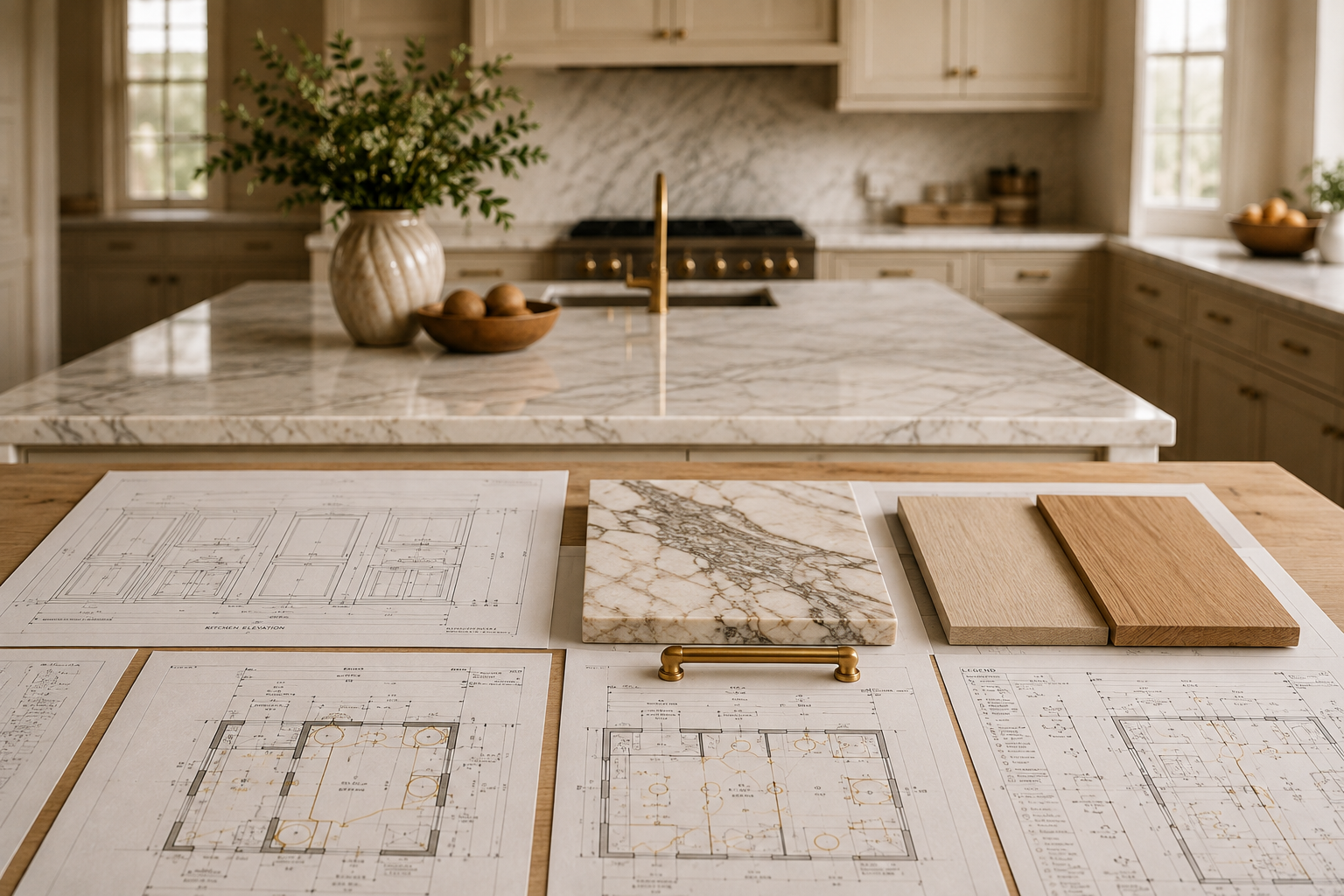
This one can get expensive very quickly. Once construction starts, everyone suddenly needs an answer. Where does the sconce go? How high should the backsplash run? Where does the tile stop? Which cabinet hardware are we using? What size is the vanity? Where should the pendant be centered?
And your electrician, tile installer, cabinetmaker, and contractor don't necessarily need those answers next week. They need them now. That is not the moment I want to be deciding what the room should look like. I want as much as possible resolved before demolition begins.
It's easy to move a light fixture six inches on a drawing. It's considerably less charming when the electrician has already wired it, the drywall is finished, and now we want to move it.
Your Construction Budget Is Not Your Finished-Home Budget
This is a big one. When people plan a remodel, the budget naturally starts with construction: cabinetry, countertops, flooring, tile, appliances, plumbing, paint and labor.
But then construction ends—and you still need a sofa, lighting, rugs, window treatments, dining chairs, art, and probably twenty other things nobody was thinking about when the first construction number was established. Suddenly, you have a gorgeous new kitchen next to a living room filled with furniture you intended to replace—and very little budget left to do it.
I would rather have that conversation at the beginning. If we know what the total investment is, we can decide where the money matters most and where it doesn't. Maybe we choose a less expensive tile because I'd rather put that money toward the lighting. Maybe we keep a dining table you already own and invest in better chairs. Maybe we phase part of the furnishing plan instead of compromising on everything.
There are almost always options. But we need to know the whole picture first.
A Beautiful Tile Can Still Be the Wrong Tile
This is probably one of the hardest things to explain until you see it happen. You can have a beautiful countertop, beautiful flooring, beautiful tile and beautiful cabinets—and put them together and somehow they are all wrong.
That's because you're not actually choosing individual materials. You're creating relationships between materials. The undertones have to work. The scale has to work. The amount of movement has to work. The finishes and textures need balance. And then those decisions need to make sense with the rest of the house.
I don't believe every room needs to look the same. I actually prefer when it doesn't. But I do want there to be a thread running through the home so that moving from one space to another feels intentional.
There is a big difference between selecting beautiful things and designing a beautiful home.
You Don't Need to Splurge on Everything
I promise. Part of my job is actually telling clients when I don't think they need to spend the extra money. I might strongly recommend investing in the sofa you're going to sit on every night and then happily put a $200 side table next to it. I may want better cabinetry but have absolutely no problem using an inexpensive decorative mirror.
There are places where quality, construction, comfort, scale, or longevity justify the investment. And there are places where the $400 option accomplishes exactly what I need it to accomplish and I don't see a compelling reason to spend $1,400.
A well-designed home should look considered—not expensive for the sake of being expensive. The trick is knowing where to spend and where to save.
Lighting Is Not an Afterthought
Please don't wait until the end of the project to think about lighting. Lighting can completely change how a room feels. I think about it in layers: recessed or architectural lighting, decorative fixtures, sconces, lamps, task lighting, and natural light.
In a remodel, those decisions can affect electrical placement, cabinetry, furniture layouts and switching long before we're choosing lampshades. A gorgeous room under bad lighting is still a badly lit room.
Lighting isn't something we sprinkle on top when the design is finished. It's part of the design.
Don't Let Instagram Design Your House
I love beautiful inspiration as much as anyone. Pinterest, Instagram, magazines, hotels, restaurants—I pull inspiration from everywhere. But there is a difference between being inspired by something and recreating every trend you see.
If we're talking about a pillow or a paint color, have fun. If we're talking about something expensive and permanent, I want to think a little harder. The goal isn't for someone to walk into your home and immediately know exactly what year you remodeled it.
I want your home to feel current, but I also want it to feel like you. Trends should be part of the conversation. They shouldn't be running it.
Beautiful Isn't Enough
This may be the most important one: your home has to work.
I want to know where you put your coffee. Where the kids drop their backpacks. Whether the dog is allowed on the sofa. Whether you actually use a formal dining room. Whether you host twelve people for Thanksgiving. Whether you read in bed. Whether you hate seeing cords. Whether you need somewhere to hide forty-seven pairs of shoes.
Those details may not be the glamorous part of design, but they're often the difference between a home that photographs beautifully and one that is genuinely wonderful to live in. I don't believe we should have to choose between beautiful and functional.
Good design should give you both.
The Best Way to Save Money? Don't Spend It Twice.
If there is one thing I wish more homeowners understood before starting a project, it's this: you don't need to have an unlimited budget to create a beautiful home. You need a plan.
I want to think about the architecture, construction, furniture, lighting, finishes, function and budget together—not as a series of unrelated decisions. Because once we know where we're going, we can make much smarter decisions about how to get there.
We can splurge where it matters, save where it doesn't, keep what already works, and change what doesn't—all while avoiding the incredibly frustrating experience of paying for something once and then paying again to fix it.
The smartest way to protect your design budget isn't simply to spend less. It's to avoid spending twice.
Jenn Giles
Principal Designer, Signature Home Design